
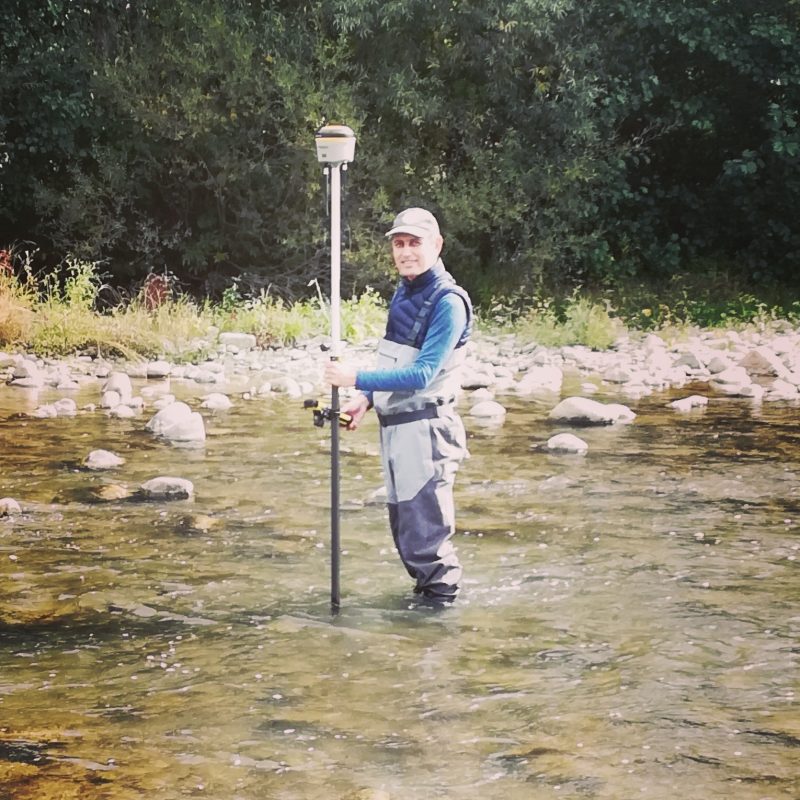

Invisible Nature’s work on nature-based solutions is led by Cristian Tetelea, Managing Partner and a Certified Ecological Restoration Practitioner.
With 25 years of experience in the nature conservation field, Cristian has been involved in pioneering nature restoration initiatives, such as the Mahmudia wetland restoration project and Fish for Life. See Cristian’s full profile here.
The European Union now has a legally binding Nature Restoration Law, setting ambitious targets to recover degraded ecosystems across the continent. Member States must submit draft national restoration plans by September 2026, with final plans due a year later. This marks a critical moment for action and collaboration.
At Invisible Nature, we’ve been at the forefront of ecological restoration for over a decade. We work with the private and non-profit sectors, environmental authorities, and local communities to design and implement impactful river and wetland restoration projects.
Our expertise is grounded in real-world experience and enriched by knowledge from multiple disciplines—including hydrology, geomorphology, ecology, and engineering.
We integrate hydrotechnical and nature-based solutions to deliver restoration projects that are not only technically sound but also practical, scalable, and aligned with EU goals.
WE OFFER:
- River and wetland restoration training and support
- Historical assessment of rivers, streams and wetlands
- River and wetland delineation and characterisation
- Functional assessment of rivers and wetlands
- Hydrological and hydraulic modelling
- Geomorphic and habitat characterisation of rivers & wetlands
- Option appraisal and selection of project restoration site
- Catchment and fluvial analysis
- Technical design studies for river and wetland restoration
- Delineation of flood-prone areas
- Consultancy for restoration works
- River and wetland monitoring
- Cost-benefit analysis and ecosystem services evaluation of restoration sites
Photo copyright: Marius Vasile
At Invisible Nature, we help build a deeper understanding of the water needs of species and habitats that rely on healthy rivers and streams. We develop nature-based solutions that balance ecological goals with the interests of all relevant stakeholders.
We work with the private and non-profit sectors, environmental authorities, and local communities to deliver customised restoration strategies that are necessary to improve the water environment and achieve ‘good ecological status’ or ‘good ecological potential’ of water bodies, as required by the EU Water Framework Directive.
Our approach brings together all essential disciplines, including hydro-morphology, ecology, and engineering, to create solutions that are scientifically sound, practical, and future-focused.
WE OFFER:
- Flow mitigation assessment
- Low flow studies and E-flow assessment for protected species and habitats
- Hydro-morphological surveys of water bodies
- Hydro-morphological design
- Integrated river habitat survey
Conservation success starts with a solid plan. At Invisible Nature, we help NGOs, environmental authorities, and private partners design impactful, fundable, and science-based nature conservation initiatives.
From concept development and funding strategies to prioritisation and feasibility studies, our expertise supports every step of the planning process.
- Project concepts, grant writing and financing solutions for nature conservation initiatives
- Conservation prioritisation (alternative land use, replacement cost analysis, connectivity measures, ecosystem services)
- Feasibility studies for river and wetland restoration
- Restoration prioritisation based on the effective allocation of the number and location of restoration actions
- Protected areas management plans & River Basin Management Plans
- Financial mechanisms for nature conservation
- Mitigation advice
- Expertise for Environmental Impact Assessment
Successful actions to protect, conserve, restore, sustainably use or manage ecosystems depend on how efficiently key stakeholders are engaged, how realities and needs of local communities are taken into consideration, and how well initiatives are communicated to key audiences.
We support organisations in developing communication strategies and stakeholder engagement tools that make conservation efforts more inclusive, relevant, and impactful.
Our approach helps you:
- Engage stakeholders early and meaningfully, reducing resistance and fostering participation.
- Identify community priorities, perceptions, and values around nature and conservation.
- Design messages and actions that balance nature-based solutions with local realities.
- Build trust, ownership, and long-term support for conservation initiatives.
WE OFFER:
- Stakeholder mapping and “table of interests” analysis
- Stakeholder consultation and facilitation for nature conservation projects through surveys, workshops, and focus groups
- Communication strategies for nature conservation projects (e.g, Life+Nature projects or Horizon Europe initiatives)
- Community engagement & communication plan
- Multi-sector partnership facilitation
- Support in the implementation of communication strategies